Listening guides
TOEFL Listening 2026 Listen to an Academic Talk Task
Listening Task 4 - Listen to an Academic Talk
Finally, you'll listen to one or more short academic talks. Each talk is about 90 seconds long and is followed by 4 questions.
The topics can come from many different subjects, including:
- Psychology
- Sociology
- History
- Economics
- Art
- Environmental Science
- Technology
- Education
Unlike the older TOEFL, these talks are shorter and more focused. According to ETS, the topics are generally chosen from areas that most test takers are somewhat familiar with, so you do not need expert knowledge to understand them.
This is the longest listening task in the TOEFL 2026 Listening section. Because the talk is longer, you'll need to remember more information and take better notes.
Sounds tricky? Don’t worry! You’ll learn everything you need in this article.
Grab a comfy branch, and I’ll walk you through everything clearly and smoothly.
Ready to stash away some knowledge?
Let’s go!
The Structure of Listening Task 4
This task is designed to simulate a short academic lecture given by a teacher or educator.
You will listen to a short academic talk that is about 100–250 words long and answer four questions about it.
The topics can come from many different fields, including history, art and music, life science, physical science, business and economics, and social science.
Let’s see an example together:
https://testinno.ir/new-toefl/real_test/RT_001/practice/listening/part/8
Format:
• Audio length: 45-120 seconds (~100-250 words)
• Questions: 4 multiple-choice questions per talk
• Speakers: 1 professor or lecturer
• Topics: Natural sciences, social sciences, arts, humanities
Common Question Types
After you listen to an academic talk, ETS usually asks a few standard question types. Let's crack these listening nuts one by one!
1. Main Idea Questions
These questions ask about the overall topic of the talk.
2. Detail Questions
These questions test whether you noticed an important fact from the talk.
3. Purpose Questions
These questions ask why the professor mentioned a particular example or fact.
4. Inference Questions
These questions ask you to make a logical conclusion based on the information you heard.
5. Do-Next Questions
These questions ask what the professor or class will do after the current lecture.
Tips and Tricks for answering Task 4 Questions
Your ears must be on alert!
Even a momentary distraction can make you miss crucial info. Listen like a super-sensitive squirrel, noticing every sound! Act like a blind person!
Be an Active Listener
Active vs. Passive listeners:
- Passive listener: Tries to understand everything, but doesn’t know why they are listening.
- Active listener: Has a clear goal before the audio begins. Knows what info they need and why.
Our goals while listening to Academic Talk:
Identify the main topic in the first 30 seconds: The talks are very short, so they should tell you the main idea of the talk within the first 30 seconds.
Identify how the professor elaborates on the topic: Listen for the examples and details that are explained in the talk.
Identify what will come after the passage (if mentioned): Sometimes one of the questions asks about what the professor or class will do after the current lecture. Listen carefully to the end of the talk if such a thing is mentioned.
Example:
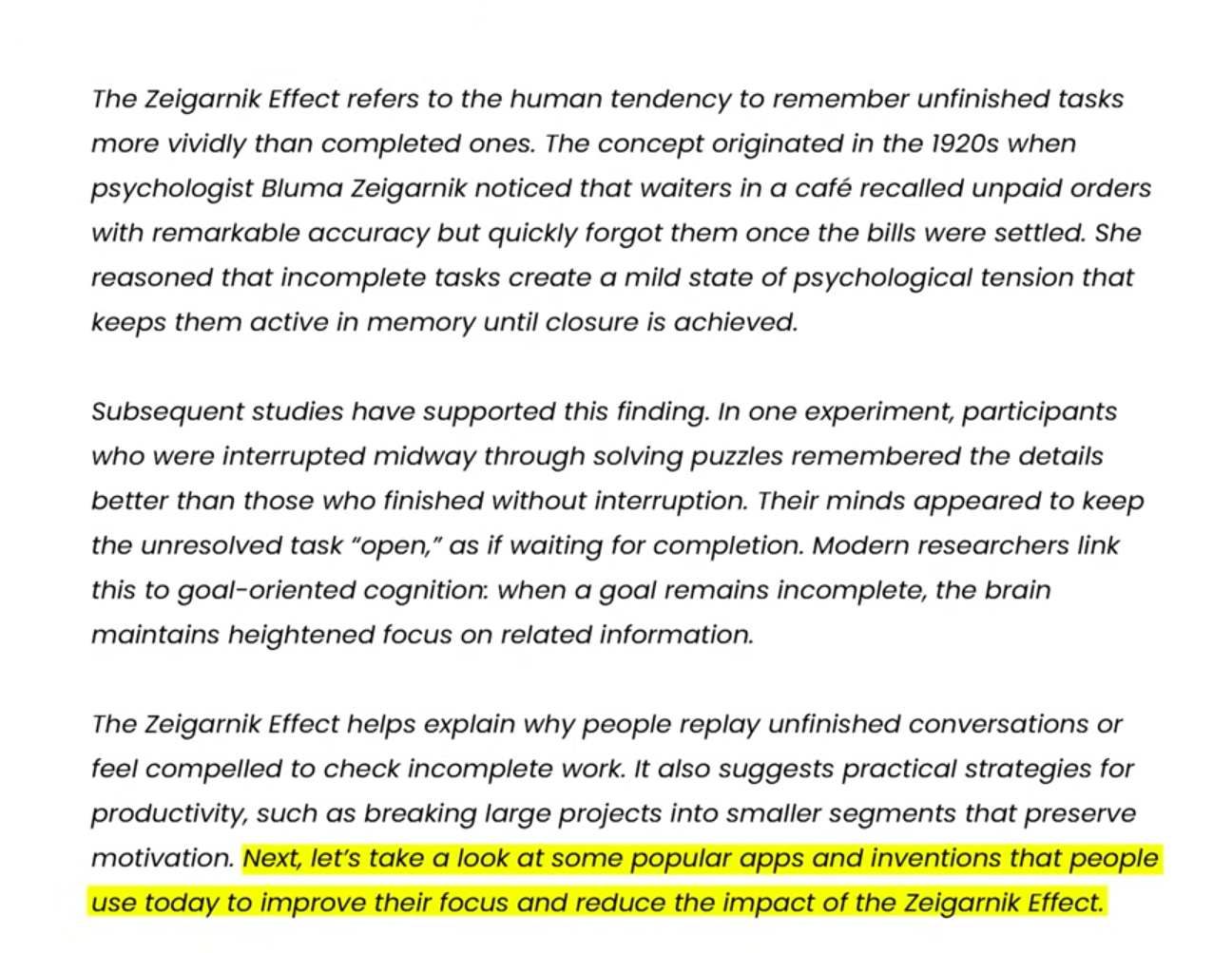
Focus on Fully Explained Information
Unlike Reading, where the text is in front of you, Listening tests comprehension, not memory.
So, don’t waste time trying to remember tiny details or passing mentions. Focus on what the speaker fully explains, because those are the points that will appear in the questions.
Take Notes
In TOEFL Listening, you hear each audio only once. Trying to remember every single word is impossible, so taking notes is key to scoring high.
Some students feel note-taking is too hard and give up, but the smart squirrels don’t! 🐿️ With practice and the right strategies, you can catch all the important points and do your best.
Note-Taking Rules
- Write down nouns, verbs, and adjectives only. Keep each line 7 words or fewer.
- Focus on key words, not extra filler words like of, to, in, a, might, should.
- Key words are important names, places, actions, and descriptions.
- Grammar words (prepositions, articles, auxiliary verbs, modals) usually don’t matter.
- Write Down the Consonants and Skip the Vowels
In English, letters are split into vowels and consonants.
- Vowels: a, e, i, o, u (and sometimes y)
- Consonants: all the other letters like b, c, d, f, g…
Here’s a fun trick: almost every word has at least one vowel, but when taking notes, you don’t need to write vowels all the time.
Why? Because even if you skip vowels and just write consonants, you can usually still understand the word. This makes your notes faster and cleaner, just like a squirrel jumping quickly through the trees!
- Know Your Key Symbols
Below is a table of nine important symbols to use when taking notes in the Listening section of the TOEFL exam.
| Symbol | Meaning |
|---|---|
| + | Profit, positive, also, together, combined |
| Ø | No, negative, stop |
| ? | Not sure, professor unsure, question |
| ↑ | Increase, upward, improvement, positive, beneficial |
| ↓ | Decrease, downward, problematic, harmful |
| → | Leads to, results in, follows |
| = | Equals, same as, something similar |
| ≠ | Not equal to, different from, not the same |
| / | And, related to |
Symbols are super helpful! They save time and let you capture more information from the listening passages. Think of them as little shortcuts for your squirrel brain!
If you’re just starting, don’t try to use all nine symbols at once, that’s too much at first. Keep it simple. Start with two or three symbols. I suggest arrows (→) because they’re easy to understand and use.
As you get better, you can slowly add more symbols into your note-taking. Remember: you’ve been taking notes your own way for years, so be patient and progress step by step, just like a squirrel jumping carefully from branch to branch.
Analyze Your Mistakes
If you missed any questions, ask why:
- Accent or vocabulary problem?
- Missed a detail in your notes?
- Misunderstood the question or answer choices?
Fixing mistakes = strengthening your Listening skills branch by branch!
Why Analyzing Mistakes Matters
Imagine a student studying biology every day but never checks the mistakes — he keeps repeating the same errors. His weak areas stay weak, and the score doesn’t grow.
If he studies why he made each mistake and fixes it, his understanding improves fast. The same applies to TOEFL Listening — review, fix, and grow!
Plan Your Next Practice Session
Based on mistakes, write a short action plan, like a squirrel planning its next jump:
- “Next time, focus more on tone and attitude.”
- “I’ll make clearer notes of key words.”
Practical Solutions for Common Listening Problems
Many TOEFL students face similar challenges. Here’s how to fix them step by step, squirrel-style!
1. Comprehension (Understanding the Main Ideas)
Practice Ideas:
a. Listen at Faster Speeds:
Play TOEFL Listening at 1.1× to 1.5× speed. Take notes, answer questions, aim for 4/6 correct. Your brain will process faster— like a squirrel jumping from branch to branch!
b. Listen to Scientific Content Quickly:
Pick a short scientific podcast or article (e.g., Scientific American).
Listen at 1.1× or 1.2× speed, summarize, then compare with a text version or chatbot to check understanding.
c. Transcription Practice:
Choose 20–30 second lecture clips, write down every word, repeat 2–3 times. Sharpens your ear for fast or tricky pronunciation.
2. Vocabulary
If words fly past your ears like squirrels chasing nuts, try this:
a. Identify New Words:
Check the transcript after listening and find the unknown words. Learn them using flashcards or example sentences.
b. Use the New Words:
Include 2–3 new words in Speaking or Writing. e.g., proposal, illustration.
c. Listen for Fun:
Spend 20 minutes/day on English content such as movies, podcasts, TED Talks. Build listening fluency naturally.
d. Practice Speaking with New Vocabulary:
Chat with AI or a partner, use 2–5 new words in a conversation. Check if used naturally and correctly.
A Nutty Farewell
Well done, little squirrels! 🐿️
We went through everything you need to know about Listening Task 4!
But we’re not finished yet. You need to practice every day and try to improve little by little.
I’ll be here with you, so feel free to leave a comment if you have any questions. I’ll jump in to help as soon as I finish cracking my nut! 🌰